In the fast-paced world of manufacturing, managing production schedules, inventory, and financials can be complex. A robust manufacturing ERP system is essential to streamline processes, minimize costs, and boost overall productivity. Among the many ERP solutions, Odoo and NetSuite stand out as two of the most popular choices. This article provides a detailed comparison to help you make an informed decision for your manufacturing business.
Odoo
Odoo is an open-source ERP platform known for its modular structure and affordability.
Businesses can pick and choose from various modules, such as inventory, production, and
accounting, to build a customized solution tailored to their specific needs. This
flexibility makes Odoo an excellent choice for small and medium-sized enterprises that
need scalability without high upfront costs.
NetSuite
NetSuite, a product by Oracle, is a cloud-based ERP system designed for growing
businesses and large enterprises. Its all-in-one solution includes financial management,
supply chain optimization, and real-time analytics. Known for its scalability, NetSuite
is ideal for businesses that require advanced capabilities and comprehensive reporting
tools to manage their operations efficiently.
Odoo Features
NetSuite Features
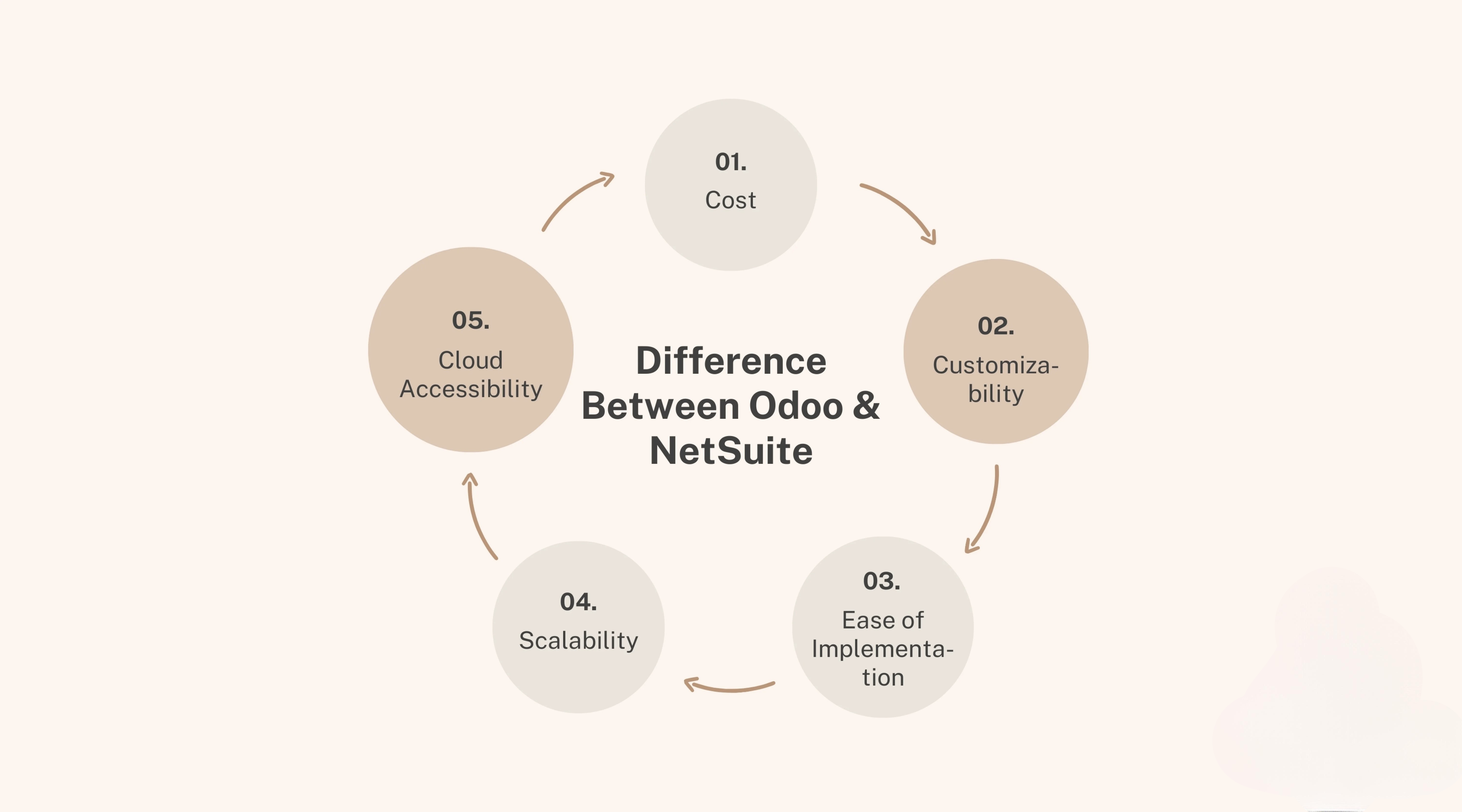
Odoo is well-known for its affordability, making it an ideal option for small and medium-sized enterprises. Its open-source nature allows businesses to pay only for the modules they need, reducing overall costs. On the other hand, NetSuite is a premium ERP platform designed for larger enterprises with more complex needs. Its higher cost reflects the advanced features and comprehensive solutions it provides.
Odoo offers unmatched flexibility due to its modular design and open-source framework. Businesses can customize the platform extensively, tailoring it to their specific operational requirements. In contrast, NetSuite provides limited customization options but compensates with a robust set of built-in features, catering to industries that require minimal alterations to their systems.
PImplementing Odoo is relatively straightforward, with its user-friendly interface and minimal infrastructure requirements. This makes it a popular choice for businesses with limited IT resources or those new to ERP systems. NetSuite, while comprehensive, demands more time and expertise during implementation, as its advanced features and integrations require careful configuration.
NetSuite outshines Odoo when it comes to scalability. It is designed to handle the growing demands of large enterprises, with capabilities that support global operations, advanced analytics, and real-time reporting. Odoo, while scalable for small to medium-sized businesses, may struggle to meet the needs of highly complex or rapidly expanding enterprises.
While Odoo is available in both on-premise and cloud-based versions, NetSuite is
entirely cloud-based. This gives NetSuite an edge in terms of accessibility,
automatic updates, and reduced dependency on internal IT infrastructure. Businesses
looking for a solution that requires minimal hardware maintenance often find
NetSuite more appealing.
By understanding these differences, businesses can align their choice with their
size, budget, and operational needs, ensuring a seamless ERP experience tailored to
their specific goals.
Achieve new heights with solutions tailored to your goals in AI, ERP, CRM, Business Consultancy, and Marketing. Whether you’re focused on efficiency or reaching a broader audience, our team is ready to make it happen.
Looking for a custom ERP waste management software development for your recycling industry? Get ERP Fast Track - ...

Get ERP Fast Track : Best ERP pharma software solution for your pharmaceutical industry, medical, and healthcare business...

Opt for ERP Fast Track : top ERP software for manufacturing industry, to empower small business types to large-scale production companies today...

Healthcare industries all over the world are centric on patients and their proper treatment and care. The implementation...
Looking for the best ERP waste management solution? Explore cloud-based, open-source, and customized ERP Fast Track ...

Are you fed up with manual processes & looking for the best manufacturing ERP software to automate your production? Get ERP Fast Track ۔۔.

Looking for the best ERP for educational institutions? Get ERP Fast Track : an open-source cloud-based ERP system for ۔۔۔

Get ERP Fast Track : the best education ERP software & academic learning management system for your school, college,...

Explore Infonet’s ERP Fast Track - an open-source cloud ERP waste management software solution for recycling industries۔۔.

The right choice of Pharmaceutical ERP Software plays an important role in streamlining operations, ensuring ۔۔۔

Pharmaceutical ERP software is specialized and enables optimizing the pharma enterprise's operation. Its sports ,...

ERP for Pharma helps pharmaceutical groups streamline operations, make sure compliance, and pressure increas۔۔.

Implementing ERP for pharmaceuticals can streamline operations, improve compliance, and optimize resource ۔۔۔
In the fast-paced world of manufacturing, managing production schedules, inventory, and financials can be...
Manufacturing ERP systems play a critical role in the digital transformation of the manufacturing industry. These system۔۔.
In the manufacturing industry, efficiency, precision, and scalability are non-negotiable. Investing in a robust۔۔۔
In the dynamic manufacturing world, ERP Fast Track : the best manufacturing ERP software, has come up as ...

Healthcare industries all over the world are centric on patients and their proper treatment and care. The۔۔.