PMO, or Project Management Office, is a centralized department within an organization that standardizes and oversees the execution of projects to ensure successful outcomes. It serves as a guiding force in project management to ensure consistency, reduce risks, and deliver projects efficiently and within scope.
The PMO creates and maintains consistent project management practices and methodologies that all teams follow, ensuring alignment across the organization.
PMO provides essential support, resources, and expertise to project managers, ensuring project teams have everything they need for success.
The PMO helps identify potential risks early on, offering proactive solutions and strategies to mitigate those risks and keep projects on track.
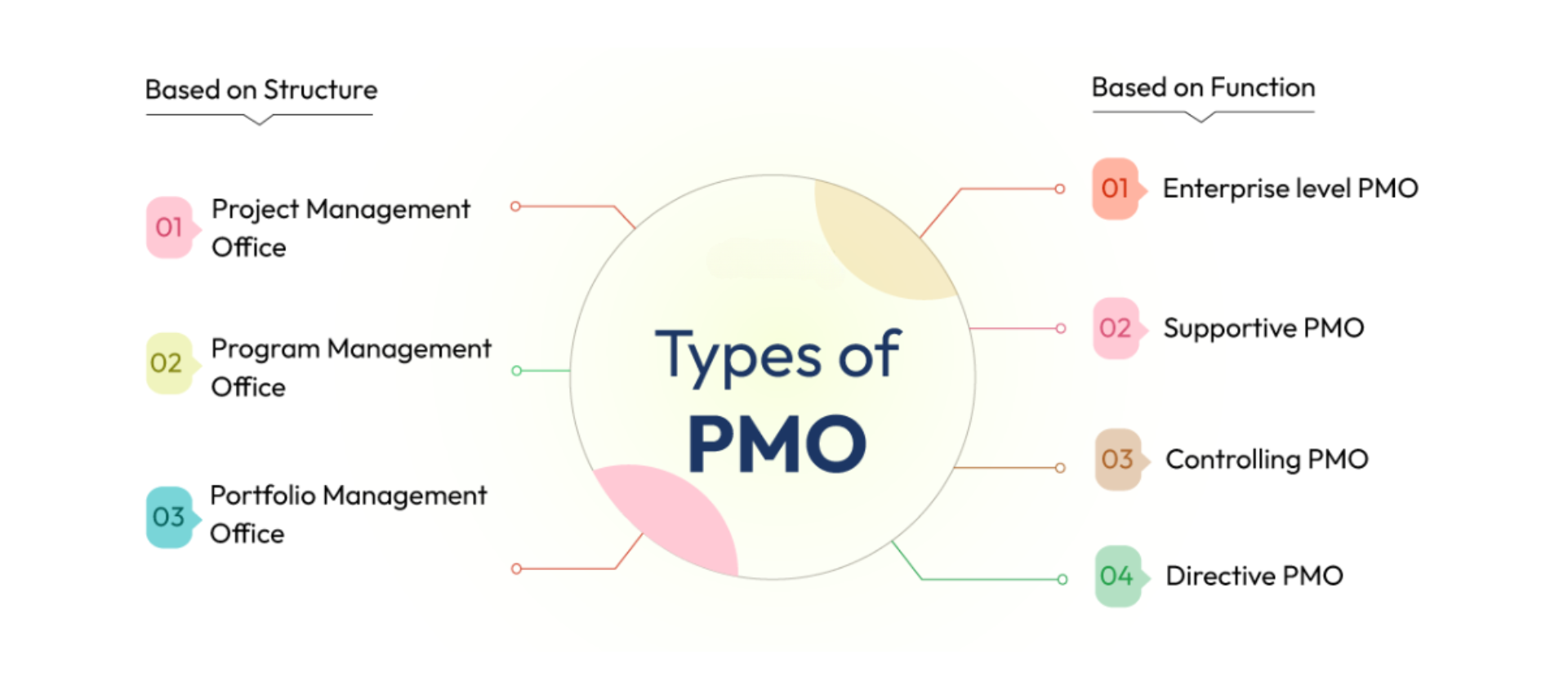
PMOs can vary in terms of control and responsibility. The three main types of PMOs are:
This type provides assistance with project management templates, tools, and advice but doesn't enforce compliance.
PMO enforces compliance with specific project management methodologies and tools, offering control over project execution.
Directly manages and leads projects within the organization, ensuring strict adherence to processes and guidelines.

The PMO acts as a strategic partner in driving business success. By aligning projects with company goals, ensuring efficient execution, and maintaining high standards, PMO plays a crucial role in delivering projects that enhance organizational performance.
By ensuring that projects are completed on time, within budget, and according to scope, PMO helps maximize the return on investment for every project.
PMO ensures all projects align with the broader strategic objectives of the organization, enhancing overall business performance.
With data-driven insights, PMO empowers leaders to make informed decisions, reducing risks and improving project outcomes.